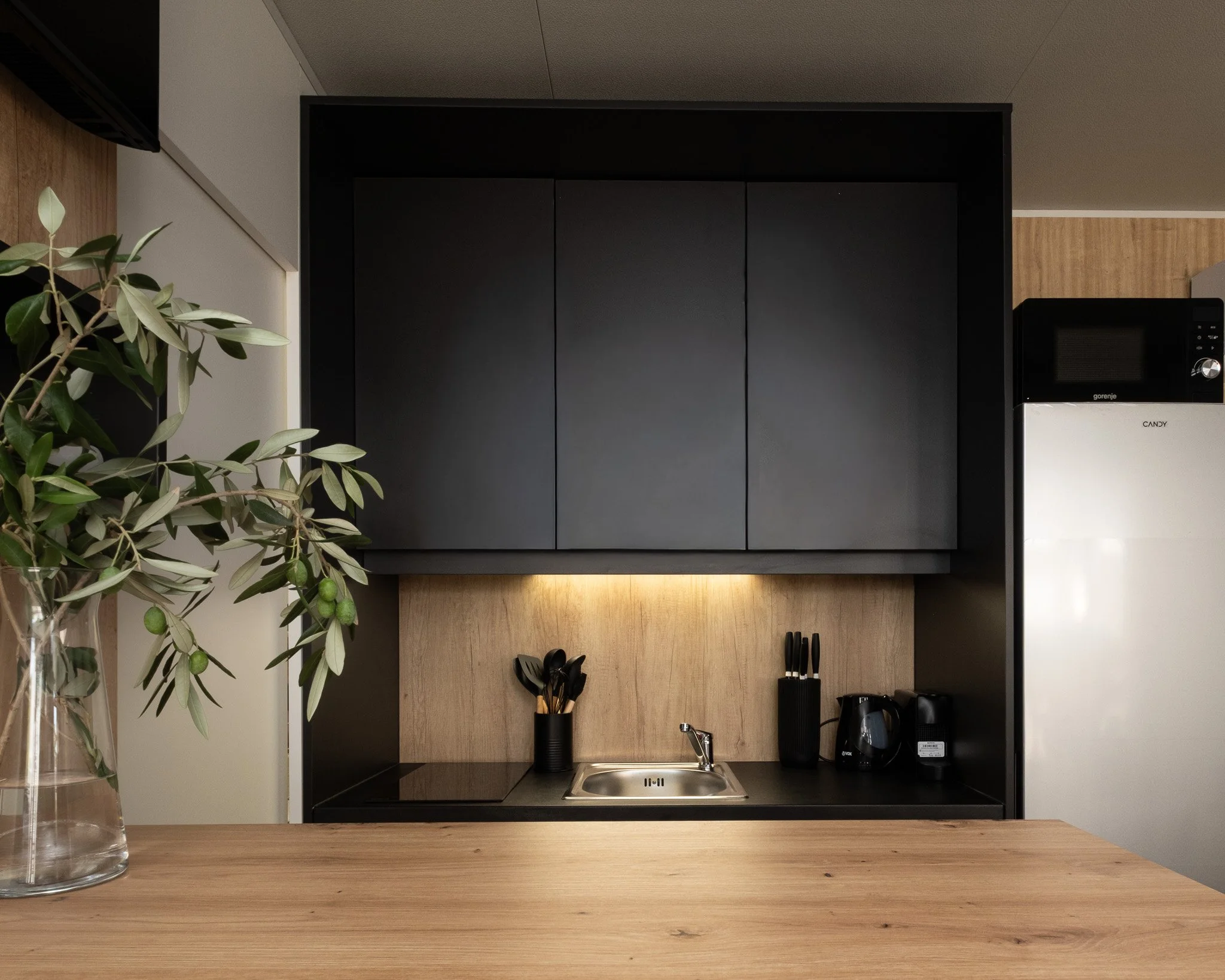
Quick answer: Declutter every surface, open all curtains and turn on all lights, remove personal items and cords, clean glass and mirrors, and stage each room for its main purpose (the bed made, the kitchen counter clear, the terrace furniture arranged). Most of this takes 1–2 hours the day before your shoot.
I've walked a lot of owners through this before a shoot: apartment hosts, boutique hotel managers, mobile home owners. It's almost always the same handful of small things that make the biggest difference in the final photos. Here's exactly what I ask people to do.
Why Preparation Matters More Than People Expect
A photographer can fix lighting and color, but can't un-clutter a countertop or hide a charging cable without spending extra editing time on it, time that usually shows up in your invoice or slows down your turnaround. Ten minutes of tidying before I arrive often has more visual impact than an extra hour of editing after.
General Checklist (Every Property Type)
Declutter every surface: countertops, nightstands, coffee tables. If it's not part of the story you want to tell, put it away
Open curtains and blinds fully, and turn on every light in the room, even during the day. Layered light makes rooms feel warmer and more spacious
Hide cords and cables: chargers, remote controls, extension cords are the single most common thing that sneaks into otherwise great photos
Clean all glass and mirrors: streaks are far more visible in photos than in person
Remove personal items for rental listings: toothbrushes, medication, family photos, laundry. Guests want to picture themselves there
Put away cleaning supplies and household clutter: rags, sponges, dish soap bottles, cleaning sprays, plastic bags, trash bins. These are some of the most common items that end up visible in kitchen and bathroom photos by accident
Fresh linens and towels, ideally white or neutral, since they photograph more consistently than patterned ones
Check the temperature and smell: a stuffy or overly warm room affects how long a photographer (or you) wants to spend adjusting things in it
Room-by-Room Checklist
Bedroom
Make the bed properly: hospital corners or at least a smooth, wrinkle-free finish. Fluff pillows and stand them upright rather than laying flat. Remove any personal clothing, luggage, or chargers near the nightstand.
Kitchen
Clear the counters down to two or three intentional items: a bowl of fruit, a coffee machine, nothing more. Empty the sink. Close all cabinet doors. Wipe down appliances, especially stainless steel, which shows fingerprints under direct light. Put away dish towels, sponges, dish soap and any cleaning products; they're small, but they're exactly the kind of thing that pulls a viewer's eye away from the room itself.
Bathroom
Close the toilet lid. Remove personal toiletries and put out fresh, neatly folded towels instead. Wipe down mirrors and any chrome fixtures, which pick up water spots quickly.
Living Room / Common Areas
Straighten cushions and throws. Remove remote controls and cables from view, or tuck them into a drawer. If there's a TV, turn it off, since a black screen reads as a dead spot in photos.
Outdoor Space (Terrace, Garden, Mobile Home Surroundings)
This is often the most overlooked category, and for mobile homes and apartments with a terrace, it's frequently the photo that sells the listing. Sweep the floor, arrange outdoor furniture as if someone's about to sit down, and remove any drying laundry, bins, or hoses from the frame.
Boutique Hotel: Multiple Rooms
If you're preparing several rooms for one shoot, keep the styling consistent across them (same towel folds, same level of tidiness) so the gallery feels cohesive rather than like a mix of different standards.
Frequently Asked Questions
How long does it take to prepare a property for a photoshoot? For a single apartment or mobile home, 1–2 hours the day before or morning of the shoot is usually enough. Boutique hotels with multiple rooms may need a bit more time, depending on how many spaces are being photographed.
Should I hire someone to style the property, or can I do it myself? Most owners can handle preparation themselves using a checklist like this one. For larger boutique hotel shoots, some owners bring in a stylist for an extra layer of polish, but it isn't required.
What's the single biggest mistake owners make before a shoot? Leaving cords, chargers and small personal items in the frame. They're easy to miss when you're standing in the room, but they stand out immediately in a photo.
Do I need to remove furniture to make a room look bigger in photos? Not usually. A wide-angle lens and the right shooting angle do most of that work. Removing one or two bulky, non-essential items can help, but you don't need to strip a room down.
Should lights be on or off during the shoot? On, generally, even in daylight. Turning on lamps and overhead lighting alongside natural light adds warmth and makes spaces feel more inviting in photos.
Does the Photographer Clean or Style the Property?
Short answer: a little, but not instead of you.
On most shoots, I'll do small adjustments on the spot: straightening a cushion, moving a chair a few centimeters, tucking away a cord I spot right before a shot, angling a lamp. That kind of micro-styling is a normal part of the job and takes seconds between shots.
What I won't do is deep-clean a property, wash dishes, do laundry, or scrub a bathroom. That's not part of a photography session, and trying to fit it in would eat into the time meant for actual shooting. If a property arrives visibly unclean rather than just "lived-in," I'll usually pause and flag it before we start, rather than shoot around it and end up with photos that don't represent the property well.
The honest version: the closer a room is to "photo-ready" when I arrive, the more of the session goes toward getting great shots instead of tidying, which is exactly why the checklist above exists.
What happens if a property genuinely isn't ready?
If I arrive and something is clearly not shoot-ready (dishes in the sink, visible clutter, an unmade bed in a room we're photographing), I'll flag it right away rather than shoot around it. From there, we usually have a few options: you take a few minutes to sort it out while I start in another room, we photograph only what's ready that day and schedule a short follow-up for the rest, or we reschedule the whole session. Whichever we choose, it's a conversation, not a surprise. If a reschedule is needed because a property wasn't ready, that's typically treated as a separate booking rather than a free redo, simply because it means a second visit.
If getting the property ready ends up taking noticeably longer than expected and eats into the time set aside for shooting, I'll always tell you before that extra time turns into extra cost, not after. That way there's no surprise on the invoice, and you get to decide how you'd like to proceed.
Not sure if you've covered everything? Feel free to send me a few photos of the property the day before the shoot. I'm happy to take a quick look and flag anything worth fixing before I arrive, so nothing catches either of us off guard on the day.
The Bottom Line
None of this requires a professional stylist or a big time investment, just a clear-eyed pass through each room with this list in hand. The properties that photograph best aren't necessarily the most expensive ones; they're the ones where someone spent an hour tidying before the photographer arrived.
Booking a shoot soon and want a version of this checklist tailored to your specific property? Get in touch; I'm happy to walk through it with you beforehand.
